
Reinsurance in Argentina: a soft market, higher retention and more strategic brokers
17/05/2026 | Brokers, Insurance
Four sector leaders analyze international reinsurance conditions, the lines with the most difficulties, local retention and the role of specialized intermediation.
By: Aníbal Cejas

The reinsurance market is going through a moment of more flexible conditions globally, with nuances depending on the line of business and the geopolitical and climate context. In Argentina, this trend intersects with rising local retention and a greater role for brokers as links between the local market and international capacity. To analyze this scenario, we consulted two reinsurers and two reinsurance brokers: Oscar Prieto, general manager of RASA; Renzo Letizia, technical manager of Nación Reaseguros; Stefano Marzotta, actuarial director, and Germán Rodríguez, marketing and operations director, both of American Reinsurance Solutions; and Álvaro Olmo, technical director of Special Division Reinsurance Brokers.
International conditions: a cycle that is softening, with nuances
The specialists agree that the market is going through a softening process, although they warn that it is not uniform and not free of risks. The differences appear when analyzing segments, geopolitical exposure and the technical quality of each ceding company.
Prieto opened the debate with a broad reading of the global context: "The global reinsurance landscape has changed significantly toward the beginning of 2026. An acceleration of the softening process is confirmed, driven mainly by the increase in available capital and greater reinsurer capacity. Reinsurers' return on equity (ROE) reached a solid 17% in 2025, which encouraged the entry of new capital and the retention of profits, strengthening balance sheets and expanding the capacity offered to the market, factors that today push prices downward. However, this softening is not uniform. Price moderation is clearer in lines less exposed to catastrophic events, while in lines highly sensitive to climate risk, reinsurers maintain a cautious stance in the face of the increasing frequency and severity of extreme events, as well as macroeconomic volatility and, above all, geopolitical volatility. Beyond the above, specialty lines could experience new price increases in the second half of the year, as reinsurers reassess aggregations, event definitions and geopolitical exposure, creating a dual environment in which technical discipline and the quality of the information provided by cedents will be increasingly decisive."
In line with that view, but focused on concrete renewal experience, Letizia said: "We observe that the international reinsurance market still shows a downward trend; this situation became more noticeable in some facultative accounts that had loss experience and have been renewed with discounts."
With a view that incorporates the geopolitical factor as a key variable, Marzotta and Rodríguez added: "although there is an important alert due to the situation in Iran and the Strait of Hormuz, the reality for less geopolitically exposed markets is attractive enough not to interrupt the opposite trend; that is, we expect continued flexibility in terms, without it constituting a pure soft cycle."
Finally, Olmo emphasized the competitive dynamics of the market: "Currently the international market is clearly softer than in previous years. There is greater available capacity and more competition among reinsurers, especially in programs with good technical performance. Although discipline is maintained in business with high loss ratios, in general conditions show greater flexibility in pricing and structures compared with recent cycles, in which the hardening was much more pronounced."
«Reinsurers' return on equity (ROE) reached a solid 17% in 2025, which encouraged the entry of new capital and the retention of profits»
Oscar Prieto, General Manager of RASA

«We observe that the international reinsurance market still shows a downward trend; this situation became more noticeable in some facultative accounts»
Renzo Letizia, Technical Manager of Nación Reaseguros
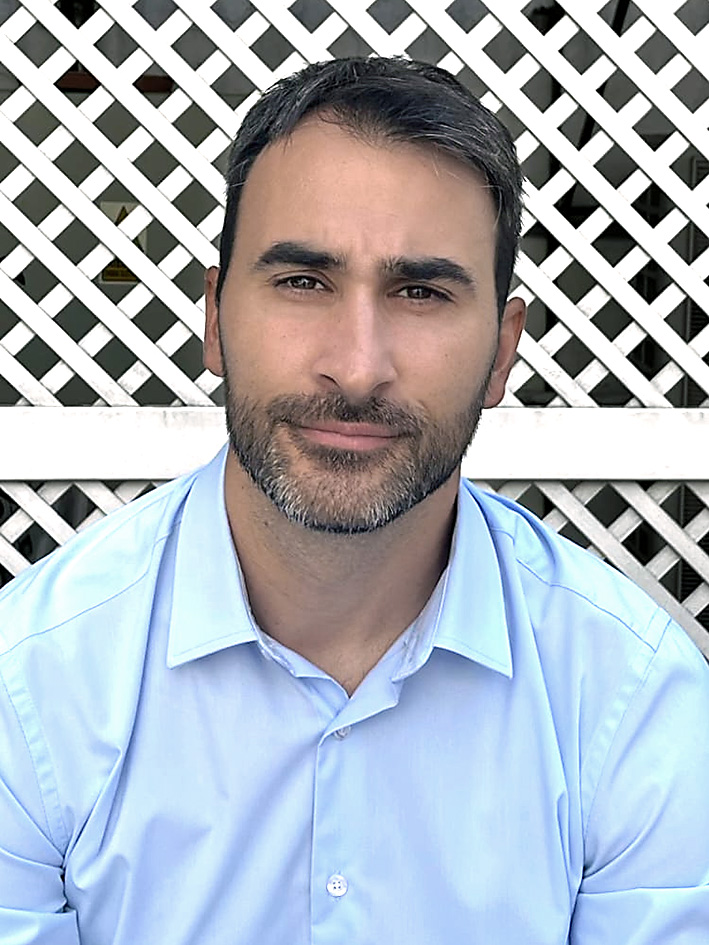
«We expect continued flexibility in terms, without it constituting a pure soft cycle»
Stefano Marzotta, Actuarial Director of American Reinsurance Solutions

Lines with the greatest difficulty obtaining coverage
On conditions for specific lines, Prieto indicated: "As of June 2025, the lines with the highest cessions to reinsurance in absolute terms were Fire (36% of the total ceded), Agricultural and forestry risks (11.2%), Third Party Liability (9.2%), Motor (7.9%) and Family combined and comprehensive (7.5%). These are precisely the lines that concentrate the greatest difficulties in obtaining coverage on favorable terms. The greatest transfer to reinsurance is observed in severity lines. These lines, which account for only 8.9% of premiums written, explain 59.2% of premiums ceded, which shows that reinsurance remains a critical instrument for high exposure risks. In particular, the agricultural line faces challenges due to high climate volatility; industrial fire and technical risks, due to the country risk perception that persists in the international market. Argentina is considered a market of little significance globally, and many international reinsurers have stopped quoting over time because of the existing difficulties, with local reinsurers being the ones who have taken that place, supporting the growth of Argentine insurers."
On this point, Letizia stated: "Continuing with the above, we do not notice difficulties with respect to certain lines in obtaining capacity. Although there are specific markets for each line of business, we currently do not perceive that any particular line presents difficulties for placement."
Then, Marzotta and Rodríguez noted: "One of the greatest challenges of our market remains the range of medium sized risks that fall outside 100% of automatic retentions, since local rates are excessively competitive and reinsurance markets continue to expect more technical conditions."
Afterward, Olmo pointed out: "Today Argentina has considerably more available capacity than in previous years. However, the main difficulties continue to be concentrated in complex lines or those with deteriorated results, such as Agro (particularly because of climate volatility) and ART (workers' compensation), where supply remains limited to a few specialized markets. Rather than a general market restriction, the challenge today is mainly the technical quality and loss experience of each program."
«One of the greatest challenges of our market remains the range of medium sized risks that fall outside 100% of automatic retentions»
Germán Rodríguez, Marketing and Operations Director of American Reinsurance Solutions

«The main risk is assuming an increase in volatility and a stronger balance sheet exposure to severe events»
Álvaro Olmo, Technical Director of Special Division Reinsurance Brokers

Rising local retention: trend and risks
On the retention of ceding companies, Prieto maintained: "Official data confirm a clear trend toward higher retention. One of the most marked trends in the Argentine market is the decline in the cession ratio, which stood at 8.96% in the first half of 2025, compared with 10.68% in the prior period, returning to prepandemic levels. A market is observed that relies more on its own retention, especially in life and personal insurance, where cession is only 3.55%. The Argentine market continues to show a strong inclination toward classic structures: 78.6% of ceded premiums correspond to proportional contracts and, within these, the quota share modality represents a resounding 70.8%. The risks of this strategy are concrete: a higher level of retention without adequate technical backing exposes insurers' capital to high severity losses, can create a mismatch between reserves and future commitments, and concentrates systemic risk in the local market. Concentration in local reinsurers has increased because international admitted reinsurers are not betting on the local market; given this, many reinsurers are sharing risks to reduce the need for external reinsurance. In this stage, the local reinsurance market closed 2025 with a profit of more than $63,158 million, showing a significant recovery."
Later, Letizia affirmed: "In line with the figures that are public knowledge in the market, it is observed that local reinsurers have increased their share in market cessions."
For their part, Marzotta and Rodríguez opined: "There are progressive but moderate increases in retention, since they are often leveraged by a favorable change in the peso against hard currencies."
Meanwhile, Olmo remarked: "A growing trend toward higher retention levels is observed, especially in medium sized and large insurers, which seek to optimize the cost benefit relationship in the face of high ROL (rate on line) in low layers, which often no longer justified such conservative retentions. In smaller companies, this trend tends to be more conditioned by minimum capital and solvency requirements. The main risk is assuming an increase in volatility and a stronger balance sheet exposure to severe events, so raising retentions requires a very careful technical and financial strategy."
Country risk and its impact on reinsurers' perception
Regarding country risk and its impact on reinsurers' perception, Prieto noted: "Argentina's macroeconomic improvement in 2025 and 2026 has begun to generate positive signals in international perception, although structural caution persists. Since the end of September 2025, country risk fell 890 points, going from 1,456 to less than 50 units. The Argentine macroeconomy improved significantly with the reduction of inflation rates and the fiscal surplus achieved. The year 2025 ended with a significant reduction in country risk and with labor and tax modernization bills that are planned to be tackled in 2026 with the aim of accelerating investment and reactivating the economy. This situation still does not change the perception of sovereign risk, which still positions Argentina as a market of greater uncertainty for international investors, including, logically, reinsurers."

Next, Letizia indicated: "We notice greater receptiveness from the international market toward our market; in fact, in recent visits we made to international hubs such as Miami and London, we perceived greater interest, particularly regarding situations that have been regularized, such as the stock of debt with foreign creditors."
Then, Marzotta and Rodríguez opined: "Although country risk does not go unnoticed by international markets, most of the reinsurers that serve our market focus their selectivity, when choosing companies, on both their technical and financial strengths and their track record and history of compliance. Reinsurance is, like insurance, a business where people and their word hold a value that is unusual in other fields."
Then, Olmo maintained: "Country risk remains an important factor, especially because of its impact on macroeconomic stability, access to foreign currency and regulatory predictability. However, the gradual improvement in payments abroad and a certain operational normalization have allowed part of the international interest to be recovered. Although Argentina is still viewed with caution, the current perception is considerably more favorable than in recent years."
The strategic role of reinsurance brokers
On their role in the market, Marzotta and Rodríguez stressed: "Specialized intermediation is an indispensable contribution of value both for the companies that receive advice and help in designing their protections, and for the reinsurers who, otherwise, would require commercial service structures that would heavily affect their cost structure."
Prieto, for his part, stated: "The role of the reinsurance broker in Argentina and in Latin America has become more strategic than ever. In the current soft market, 2026 is shaping up as a year of opportunities for reinsurance buyers. The competitive advantage no longer lies only in paying less, but in using the cycle to strengthen the resilience and efficiency of the reinsurance program ahead of the next change in trend. In that framework, brokers act as program architects, technical advisors and connectors between local cedents and an international capacity that, although more competitive, demands ever higher data quality and technical presentation of Argentine risks."
Immediately after, Letizia affirmed: "Reinsurance brokers have played an important role in our market, since, among other tasks, they have been one of the fundamental channels through which the international market accompanied the market's evolution."
And Olmo concluded: "Today the broker has a much more strategic role than that of simple intermediation. The real value lies in providing access to markets, negotiating capacity, structural design and solutions adapted to an increasingly complex context. At Special Division we understand that the broker must accompany insurers not only in traditional placements, but also in more sophisticated solutions, such as structured reinsurance, parametric covers and alternatives that help optimize protection, costs and the stability of results. In a market like Argentina's, where technical, financial and regulatory challenges coexist, the broker plays a key role as a strategic partner between local needs and global solutions."